Author Archives: edmontonvisioncentre

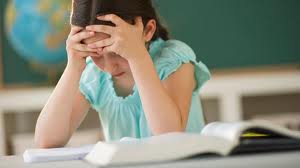
Children’s Headaches Rarely Indicate A Need For Eyeglasses

A new study provides the first clear evidence that vision or eye problems are rarely the cause of recurring headaches in children, even if the headaches usually strike while the child is doing schoolwork or other visual tasks. Many parents assume that frequent headaches mean their child needs glasses, so they ask their doctor to refer their child for an eye exam. This study was conducted by pediatric ophthalmologists who wanted to find reliable answers for parents, family doctors and pediatricians facing this common health question. The research was presented at the 116th Annual Meeting of the American Academy of Ophthalmology, conducted jointly this year with the Asia-Pacific Academy of Ophthalmology.
child eyeglasses
In this retrospective study, which was conducted at the ophthalmology clinic of Albany Medical Center in New York state, researchers reviewed the medical records of 158 children under age 18 who were seen at the clinic for frequent headaches from 2002-11. All of the children received complete eye exams by the clinic’s ophthalmologists.

No significant correlation was found between their frequent headaches and a need for vision correction. The researchers reached this conclusion by comparing the results of the clinic’s exams of the children with headaches to the records of their previous eye exams and other relevant medical care. Eye health and vision test results remained unchanged from earlier exams for 75 percent of the children. Also, children who already had eyeglasses were not found to need new prescriptions at the time they were seen at the clinic for headaches. Although about 14 percent of the children reported that their headaches occurred while doing visual tasks like homework, and about nine percent reported visual symptoms associated with their headaches, a need for vision correction did not appear to be the primary cause or a significant factor in any of these cases, according to the study.

The researchers considered it positive that most of the children’s headaches resolved over time. Follow up reports from parents showed that headaches improved in 76.4 percent of all study subjects, including those who did and those who did not receive new vision correction prescriptions. Children who received new prescriptions were not more likely than others to have their headaches improve. Assessing the causes of the headaches and addressing the children’s long-term outcomes were beyond the scope of this study.

“We hope our study will help reassure parents that in most cases their children’s headaches are not related to vision or eye problems, and that most headaches will clear up in time,” said Zachary Roth, M.D., who led the research team. “The information should also be useful to family doctors and pediatricians in caring for children and parents who have this common health concern.”

About thirty percent of the children in the study had eye conditions that went beyond the need for vision correction, including strabismus (misaligned eyes) amblyopia (“lazy eye”) or other rarer, more serious conditions. Seventeen percent had a family history of migraine. Because this was a retrospective study, the researchers were unable to connect these factors with headache causes.

Feed Your Eyes: Nutrition for Eye Health

When we think of eating for our health, we’re usually watching our waistline, not our eyesight. But it’s just as important to eat for your eyesight, doctors and researchers say.

Macular degeneration and cataracts are two diseases that may be prevented if you eat the right foods. Among foods considered good for your eyes are:

  1. Beta-carotene foods: Carrots, sweet potatoeyeglasseses, kale, cantaloupe, apricots, and cherries
  2. Vitamin C: Bell peppers, broccoli, Brussels sprouts, oranges, strawberries, and kiwis
  3. Vitamin E: Wheat germ, almonds, sunflower seeds, flaxseeds, peanut butter, and avocados
  4. Rich in zinc: Oysters, ostrich (a very lean meat), turkey, pumpkin seeds, and chick peas
  5. Rich in lutein and zeaxanthin: Spinach, Swiss chard, watercress, corn, and persimmons
  6. Omega-3 foods: Wild salmon, sardines, Atlantic mackerel, and omega-3-fortified eggs

Vitamin D May Prevent Macular Degeneration

Macular degeneration, the leading cause of blindness in people over 60, is a late-onset disease that results in degeneration of the central portion of the retina that allows you to have focused, precise vision. It currently affects about 8.5 million Americans aged 40 and older, and another 7.3 million people have an early form of the disease.

Studies have shown that fatty fish, as well as Vitamin D, seem to ward off age-related macular degeneration. A University of Buffalo study found that women under the age of 75 who got sufficient Vitamin D had a 59% reduced risk of developing this disease. The top sources of Vitamin D among the women studied were milk, fish, fortified margarine, and fortified cereal.

Fatty Fish and Macular Degeneration

macular-245x300Two other studies have found that eating fatty fish rich in omega-3 also reduced the risk of developing macular degeneration.

In one study, at Brigham and Women’s Hospital and Harvard Medical School in Boston, women who got the highest amounts of docosahexaenoic acid (DHA), an omega-3 fatty acid found in fish, were 38% less likely to develop macular degeneration. And those women who ate one of more servings of fatty fish per week (such as canned tuna and dark-meat fish) were 42% less likely to be diagnosed with the disease than women who ate fish less than once a month.

Another study at the Eye Institute at Johns Hopkins School of Medicine also had similar findings. More than 2,300 people who lived along Maryland’s eastern shore were followed for over a one-year period. Later, they were evaluated for macular degeneration; 227 were in the early stages of the disease, 153 had intermediate-stage disease, and 68 were in an advanced stage. Researchers found that those with advanced macular degeneration were significantly less likely to eat fish and shellfish rich in omega-3.

These omega-3 fatty acids can also be found in salmon, trout, and sardines. It’s not exactly known how omega-3 reduces the risk of disease, but some research indicates that chronic inflammation may help cause macular degeneration. Omega-3 fish oils have anti-inflammatory properties.

How Vegetables Reduce the Risk of Cataracts

Vegetarians are less likely to develop cataracts, another disease that veggies-300x200leads to blindness, than meat-eaters, another study found. Cataracts form when the eye’s lens becomes cloudy, leading to blurred vision and even vision loss. About 21 million Americans have cataracts in at least one eye, and the number is expected to increase to 30 million by 2020.

A study at the University of Oxford in England found that vegetarians and vegans were 30% to 40% less likely to develop cataracts than people who eat a lot of meat. The more meat people ate, the greater their risk of developing cataracts, the research found.

In addition, other research has found that green leafy vegetables and colored fruits are good for the eyes. These foods contain carotenoids such as lutein and zeaxanthin, which have a positive impact on the retina. They help reduce discomfort from glare, enhance contrast, and may increase visual range. The pigments in carotenoids help protect the retina and lens, and may even protect against macular degeneration and cataracts, researchers say. Foods especially rich in lutein and zeaxanthin are kale and spinach.

Comfort For Bespectacled Kids – Eyeglasses Make Them Look Smart According To Their Peers

Young children tend to think that other kids with glasses look smarter than kids who don’t wear glasses, according to a new study.

Children between the ages of 6 and 10 who were surveyed for the study also thought that kids wearing glasses looked more honest than children who don’t wear glasses. child eyeglasses

Otherwise, the survey suggested that children don’t tend to judge the attractiveness of their peers who wear glasses when asked about their appearance, potential as a playmate or likely athletic abilities.

The findings might give children some comfort when they are fitted with their first pair of eyeglasses, said lead study author Jeffrey Walline, assistant professor of optometry at Ohio State University.

“If the impression of looking smarter will appeal to a child, I would use that information and tell the child it is based on research,” Walline said. “Most kids getting glasses for the first time are sensitive about how they’re going to look. Some kids simply refuse to wear glasses because they think they’ll look ugly.”

The study is published in the May issue of the journal Ophthalmic and Physiological Optics.

Walline surveyed children in this age range because they are more likely to be prescribed eyeglasses than contact lenses. Generally, children with nearsightedness are diagnosed with myopia and receive their first corrective lenses at around age 8. Teen-agers were not surveyed because they are routinely fitted with contact lenses if they want them.

For the study, Walline and colleagues assembled a series of 24 pairs of pictures of children for comparison. The children in each pair differed by gender and ethnicity, and each pair included one child with glasses and one child without glasses.

Eighty young children – 42 girls and 38 boys – were surveyed. Of those, 30 kids (38 percent) wore glasses, 34 had at least one sibling with glasses and almost two-thirds had at least one parent who wore glasses.

The questionnaire featured six questions, many based on similar studies in adults. When presented with each pair of photos, the participants were asked which of the two children pictured: would you rather play with; looks smarter; looks better at playing sports; do you think is better looking; looks more shy; and looks more honest?

On average, two thirds of the participating children said they thought that kids wearing glasses looked smarter than kids not wearing glasses. And 57 percent of the participants said they thought kids with glasses appeared to be more honest. Both kids with and without glasses thought other kids wearing glasses looked smarter.

Walline said the findings suggest that media portrayals associating spectacles with intelligence may be reinforcing a stereotype that even young children accept.

In the case of the other four questions in the survey, the answers were not consistent enough to suggest that glasses made a difference in how the kids felt about the pictures they were examining.

Other trends emerged, however, that had nothing to do with whether the kids in the pictures were wearing glasses and which supported conventional wisdom about kids’ opinions. Both boys and girls said they thought that boys appeared to be better at playing sports. Boys indicated they would rather play with boys, and girls said they would prefer playing with girls. Both boys and girls thought the opposite gender looked more shy. Girls also were more likely than boys to pick their own gender when asked which child looked more honest.

The fact that the question of attractiveness yielded no significantly different answers for children with or without glasses suggests that kids don’t automatically consider kids with glasses to be unattractive, Walline said.

“The concern about attractiveness with glasses seems to be more internal to a particular child rather than an indicator of how they’ll feel about other people who wear glasses,” Walline said.

Walline conducted the study with Loraine Sinnott, Anita Ticak, Sylvia Jones and Lisa Jones of Ohio State’s College of Optometry, and Erica Johnson of the Southern California College of Optometry.

Eye Makeup: How Does it Affect Your Vision?

eye 1I get a lot of questions from women about how safe eye makeup is for their eyes. The good news is, eye makeup is perfectly safe. The bad news is, there are still plenty of ways to make it unsafe for your vision. Improper application, improper removal, or simply applying too much eye makeup can all be hazardous to your vision.

remove makeupSo here are some of my tips to make sure you’re that when you’re playing up your peepers with eye makeup, you’re doing it as safely as possible.

  • Throw your mascara out after 3-4 months, and don’t try to re-wet dried mascara with water or saliva.
  • Don’t share cosmetics with others—you’re essentially sharing bacteria when you do this. If you wouldn’t share your toothbrush with your friend, don’t share your mascara either. (This is the exception to the rule, “sharing is caring.”)
  • Don’t apply your makeup on the move—like in the car, for example (especially if you’re the one driving!). It increases the chances of your eye pencil or mascara scratching your eye.
  • Avoid applying eye makeup when you have an infected or irritated eye.
  • Wash your hands before applying makeup.
  • Use a proper makeup remover before bed—leaving your eye makeup on overnight can lead to infected or dry, irritated eyes; and it’s also bad for your lashes. A quality eye makeup remover is a great option for safely removing your mascara, eyeliner and eye shadow.

eye makeupEye makeup is a great way to show off those beautiful baby blues—just follow these tips to be safe while you’re doing it.

Edmonton Vision Centre strives to provide best eye care service to our existing and new customers. So hurry up and book an appointment with Dr. Paul Singh (Optometrist ) today to secure the health of your precious asset.

Our Location:

Edmonton Vision Centre

4351 50 St NW

Edmonton, AB T6L 7E8 Canada‎

Tel: +1 780-440-9696 (Map)

Website: www.edmontonvisioncentre.com

Youth Sports & Protective Eyewear

safetyWhen it comes to youth sports, many parents may be concerned about injuries, but the first thing that crosses your mind may not be eye injuries. However, eye injuries can be extremely common and also dangerous to your child’s long-term vision. In fact, up to 40,000 eye injuries are reported each year.

Some sports may be more hazardous than others. For example, football is known as being an extremely physical, high-contact sport, but the risk of eye injury with basketball or tennis is also high. That’s why I recommend wearing protective eyewear when participating in any sport. This is especially important among youth, as an injury to the eye at a younger age could cause long-term vision damage.

goglesSports goggles are the ideal form of protection for your eyes. Often made from polycarbonate (a very impact-resistant material) and available in a variety of shapes, sizes, and styles, they’re designed specifically to protect your eye from injury during physical activity. An added bonus is that prescription goggles can enhance sports performance if you or your child has a slight vision problem.

Sports goggles are tailored to the specific activity  in which your child participates. For example, contoured goggles that fit more closely around the face are ideal for sports where you’re moving quickly and your eyes are at risk of flying debris, such as biking. There are goggles made to fit securely beneath football helmets. There are styles made for contact lens wearers as well.

Edmonton Vision Centre strives to provide best eye care service to our existing and new customers. So hurry up and book an appointment with Dr. Paul Singh (Optometrist ) today to secure the health of your precious asset.

Our Location:

Edmonton Vision Centre

4351 50 St NW

Edmonton, AB T6L 7E8 Canada‎

Tel: +1 780-440-9696 (Map)

Website: www.edmontonvisioncentre.com

Visual Reading Disorders

readingThere are many learning disorders that are related to vision problems. The brain processes information visually in several different ways. As we’ve discussed before, many times children are misdiagnosed with behavioral disorders when the actual issue is a visual/learning disorder.

disordersHere are some of the more common ways our brain processes information visually:

  • Sequencing (the ability to see and distinguish words, symbols, and numbers)
  • Figure–Ground Discrimination (the ability to distinguish a character or shape from its background)
  • Motor Processing (also referred to as hand-eye coordination, the ability to process information from the eyes and move parts of your body accordingly)
  • Memory (long-term and short-term, the ability to remember what you have seen)
  • Spatial Relationships (the ability to determine how shapes are positioned in relation to one another)
  • Discrimination (the ability to process and distinguish one item from another)

childVisual disorders can manifest themselves in many different ways because of the many different ways we visual process information.

Edmonton Vision Centre strives to provide best eye care service to our existing and new customers. So hurry up and book an appointment with Dr. Paul Singh (Optometrist ) today to secure the health of your precious asset.

Our Location:

Edmonton Vision Centre

4351 50 St NW

Edmonton, AB T6L 7E8 Canada‎

Tel: +1 780-440-9696 (Map)

Website: www.edmontonvisioncentre.com

Dry Eyes & Contact Lenses

contactFor many with vision problems, contact lenses are an ideal solution. They offer an uninhibited range of vision and have progressed so much in quality that they are often unnoticeable to the wearer once they’re in.

However, one common issue we run into with contact lens wearers is dry eyes. Thankfully, there are many options to treat this issue and find the right solution for you. With a variety of lenses and other products on the market today, dry eyes for contact lens wearers can often be treated fairly easily. You may be concerned that you won’t be able to continue wearing contact lenses, but these days that is rarely a necessity. In most cases, we can find a solution to your dry eye problem so that you are able to remain a contact lens wearer.

lensesOne of the best advances made in contact lenses is the improvement of dailies—that is, lenses that you wear for a day and then discard. These are a great first option for someone struggling with dry eyes. Other possibilities include switching to a lower water content lens, lubricated eye drops (over-the counter or prescription—make sure you work with us to determine the best product),  a different cleaning solution…the options are many.

Edmonton Vision Centre strives to provide best eye care service to our existing and new customers. So hurry up and book an appointment with Dr. Paul Singh (Optometrist ) today to secure the health of your precious asset.

Our Location:

Edmonton Vision Centre

4351 50 St NW

Edmonton, AB T6L 7E8 Canada‎

Tel: +1 780-440-9696 (Map)

Website: www.edmontonvisioncentre.com

You should wear sunglasses

You probably already wear sunglasses, but if you don’t you should start.  Here are some reasons you should do that:

1) If you get big obnoxious ones like me you can pretend to be an incognito celebrity.
2) You’ll protect your eyes.
3) You’ll have less trouble seeing when you’re driving directly into the sunlight.
4) They look super cool.
5) Throw on some sunglasses and lipstick and skip the rest of your makeup if you’re in a hurry
6) Sunglasses are the ultimate assistant in becoming photogenic.

I’m not gonna lie, number 6 is the main reason I wear sunglasses religiously.  When I travel I love to get tons of photos, but inevitably I don’t look super awesome in certain shots.  But if I’m wearing sunglasses I find that the way I look in the photo is immeasurably better than if I had not worn them. I took photos demonstrate this:

Scenario 1: You decide not to full tooth smile.  I guess you’re trying to be cute without being obvious.
sunglasses 1
sunglasses 2
Admittedly the first photo is not that bad, but I do look all kinds of squinty.  Not so in the sunglasses photo.
Scenario 2: Somebody caught you not smiling. You kind of look mad. Or tired.
sunglasses 4
sunglasses 3
Photo one is not cute.  Photo two is decidedly cool.
Scenario 3: Somebody caught you mid-sentence and your mouth is partially open and looking all sorts of weird.
sunglasses 5sunglasses 6
Photo one is a disgusted teenager.  Photo two is “haha, she’s so cute, she wasn’t ready for the photo. Adorable.”

And because it’s incredibly obvious that these photos were staged I give you an actual example of sunglasses vs. no sunglasses that ACTUALLY HAPPENED!
sunglasses 8sunglasses 7
There are some other problems going on with the first photo in terms of my posture and the fit of the sweater that are affecting the way that I look, but I think the sunglasses help a TON.

Quick note about sunglasses and their prices.  There are two schools of thought:

School One: Purchase expensive sunglasses.  You wear them everyday so they should be high quality.  You’ll be more likely to take care of them and less likely to lose them if you have invested in them.
School Two: Purchase cheap sunglasses.  For goodness sake, they are SUNGLASSES!  Why spend a ton of money on them?  If you lose them, no big deal, you’ll replace them without a thought.

While I see the points of school one, I fall decidedly into school two.  I went through a phase where I couldn’t keep a pair of sunglasses for more than a month, so I refuse to pay more than $15-$20.  That being said, I found this pair at Edmonton Vision Centre for a total of $5 over 4 years ago and I’m still wearing them.  When you find a pair that works, stick with it!

Edmonton Vision Centre strives to provide best eye care service to our existing and new customers. So hurry up and book an appointment with Dr. Paul Singh (Optometrist ) today to secure the health of your precious asset.

Our Location:

Edmonton Vision Centre

4351 50 St NW

Edmonton, AB T6L 7E8 Canada‎

Tel: +1 780-440-9696 (Map)

Website: www.edmontonvisioncentre.com

Contact Lenses and Glasses: A Match Made in Heaven?

There are a lot of articles floating around the web which try to compare contact lenses and glasses. But do they miss the point? Contact lenses and glasses have different qualities, making them well suited for different situations. But really they work great together. Even if someone prefers to wear their contacts all the time, they should still have a pair of specs handy.

Wearing Contact Lenses to Play Sport

One of the main strengths of buying contact lenses is that they’re great for people who play sport. When you’re running around, playing football, rugby etc., contacts do seem to have an advantage. They can provide better peripheral vision and could potentially improve performance as a result. They also have safety benefits in these situations.

That said, contact lenses shouldn’t be worn all the time. It’s good to take a break sometimes and sport your specs. Constantly wearing contact lenses can increase the risk of eye infection, so wearing your glasses a few days a week and not wearing your contacts all day long can be great for your eyes.

Mixing Things Up a Bit

Woman Looking Very Sexy Wearing Glasses

At the same time as health considerations, it’s great to mix things up a bit, and sporting your glasses for a change can offer a fresh look. With popular brands of eyewear such as Ray-Ban, Oakley or Prada, and celebrities wearing glasses in public more often, glasses aren’t just a way to see clearly. They’re now much more of a fashion accessory, and wearing glasses some days and contact lenses another is a great way of mixing things up.

A Combination of Coloured Contact Lenses & Glasses

To add an extra dimension to your look and spice things up, combining coloured contact lenses with your glasses can be a great way to go.  Coloured lenses can be bought in plano (which means they won’t correct your vision), allowing you to change your eye colour and wear your glasses.

Coloured Contact Lenses for Fashion

For the fashionistas out there, this technique offers endless combinations to vary your look. There are a variety of different colours available for contact lenses, from your standard blue to more distinctive colours such as amethyst. The lenses have also been designed for a range of eye colours, either to provide a subtle or dramatic change in eye colour.

So why do contact lenses and glasses work great together? Well firstly, they both work great in different situations because they have different qualities. At the same time, it’s just good to mix things up a bit for a fresh look by wearing contact lenses some days and glasses another. To add even more variation, contact lenses can be bought in a range of colours, and you can experiment with different colours while wearing glasses.

Edmonton Vision Centre strives to provide best eye care service to our existing and new customers. So hurry up and book an appointment with Dr. Paul Singh (Optometrist ) today to secure the health of your precious asset.

Our Location:

Edmonton Vision Centre

4351 50 St NW

Edmonton, AB T6L 7E8 Canada‎

Tel: +1 780-440-9696 (Map)

Website: www.edmontonvisioncentre.com

Hidden benefits of contact lenses

It is commonplace now to protect our skin with sun creams but what about protection for our eyes?

lenseWhile our bodies are amazing at repairing and replacing some spoiled cells, the crystalline lens of the eye is an exception that is never replaced. Therefore gradual UV exposure over the years can lead to the early development of cataract, causing reduced vision.  Ocular UV related changes are not limited to cataract but have a role in the development of age related macular degeneration , photo keratitis, pterygium and can cause melanomas of the skin around the eye and eyelids.

Most sun damage is accrued during the early developmental years of life, perhaps only showing itself later in life. Therefore sun protection for children is vital.

So how do we protect our eyes from the harmful UV exposure? A good pair of sunglasses is a great start. These should offer protection to the level of UV 400. This means that 99-100% of harmful UVA and UVB wavelengths are blocked out. The style and fit of the spectacles can also make a difference. The larger the lens, or the more wrap around the style then the more UV light is blocked out.  Be very wary of cheap sunglasses without the UV400 protection. The dark nature of these lenses causes the pupil to get bigger behind the lens, allowing even more harmful light into the eye. Standard spectacle lenses do not offer UV protection.

A great benefit of many modern soft contact lenses and some RGP lenses is that they have a built in level of UV protection. This means the added benefit of year round UV protection as well as coverage of the whole eye.

Edmonton Vision Centre strives to provide best eye care service to our existing and new customers. So hurry up and book an appointment with Dr. Paul Singh (Optometrist ) today to secure the health of your precious asset.

Our Location:

Edmonton Vision Centre

4351 50 St NW

Edmonton, AB T6L 7E8 Canada‎

Tel: +1 780-440-9696 (Map)

Website: www.edmontonvisioncentre.com